Original Blog
How I Memorized 2,000 Japanese Vocabs in 30 Days with Study to Scroll
30 days ago, my tutor gave me a simple yet seemingly arduous mission: pass the JLPT N3 in one month, or stay stuck in the beginner Japanese class.
You see, I've recently made the decision to move to Japan and begin my study in a language school in Tokyo. And because I'm eligible to enrol in a faster class and graduate earlier than my peers, my tutor strongly advised me to pass JLPT N3, which is the intermediate level for reading and listening to Japanese.
This is because at the time, my Japanese proficiency was just shy of JLPT N4. By math, reaching N3 would need 2000 new vocabs and grammar points - around 66.7 new knowledge per day.
So far, I've been casual about learning Japanese, but this time, I was met with a task that has volume and a tight deadline. Luckily for me, I've just finished building the Study to Scroll and AI Card Generation features in my app. And what's better than testing new features on the maker myself?
Disclaimer: The mock test I partook has the difficulty equivalent to JLPT N3 designed by the school that divides the subjects into vocabulary, grammar, and reading comprehensions. No listening test was included.
Day 1: Starting small, feeling it out
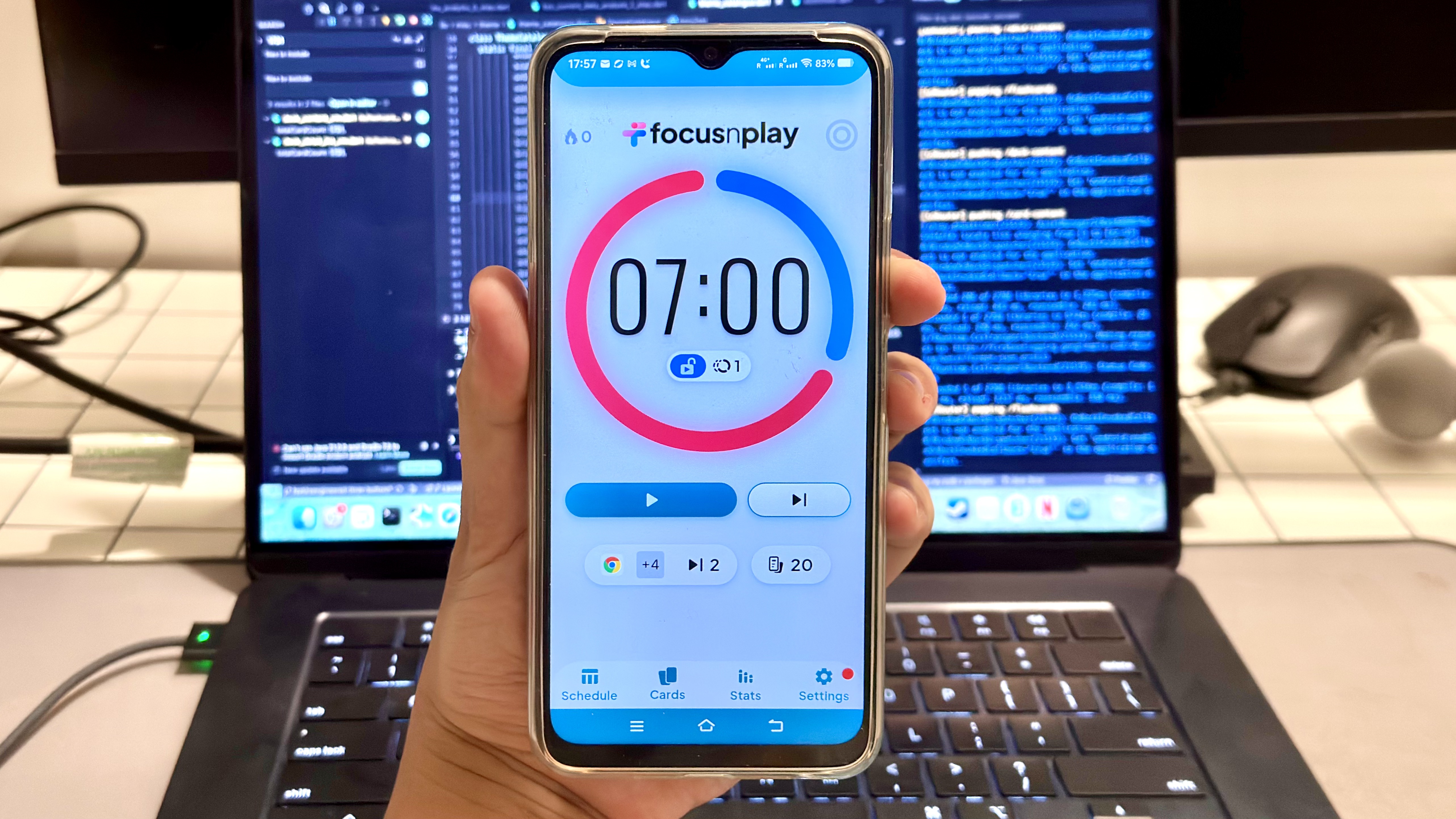
I started my experiment off with a modest goal — learning 20 new concepts per day. The idea was just to get a feel for how Study to Scroll could work out for me in minimal conditions.
For those who don't know: Study to Scroll is a feature in FocusNPlay that blocks your apps and only unblocks them once you completed the flashcard review. You want to open Instagram? Answer some cards first. The app doesn't get unblocked until you've completed a study session, curbing your chances to doomscroll.
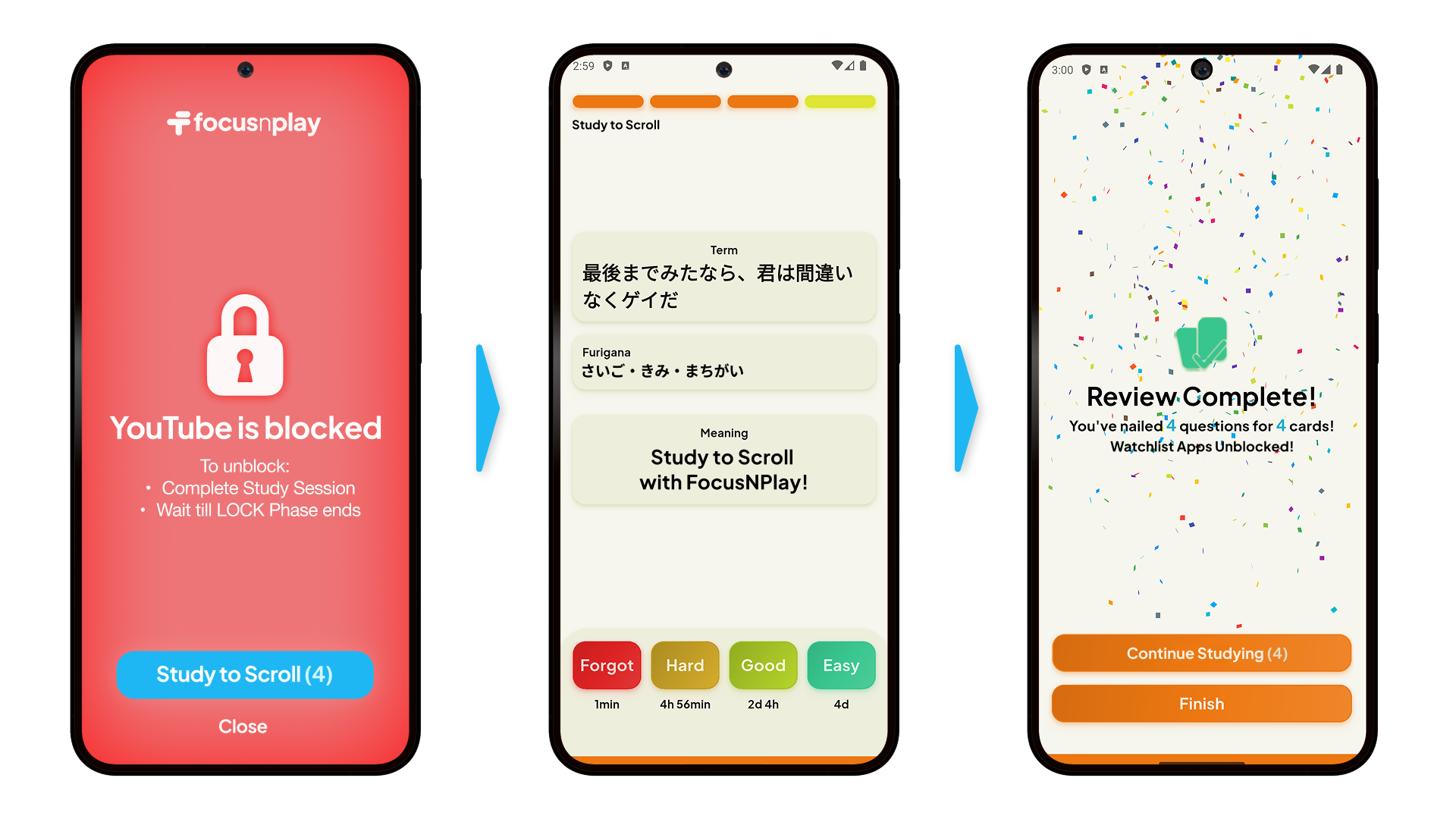
Read more on how Study to Scroll works better than other app blocking tools through behavioural techniques.
Those first few days were cakewalk. 20 cards, spread across however many times I picked up my phone during the day, felt like nothing. I'd study 3–4 cards per unlock, hit my daily target by lunchtime consistently, while barely making any efforts.
This is when I realized the true potentials of Study to Scroll.
Where most people stumble on the biggest problem in learning any subject - consistency, Study to Scroll users could easily crush these goals, not only because they are now able to break large study goal into smaller study sessions, but they were constantly reminded of how it replaces mindless scrolling with something beneficial and effortless, encouraging users to go for a bigger goal.
The revelation that changed everything
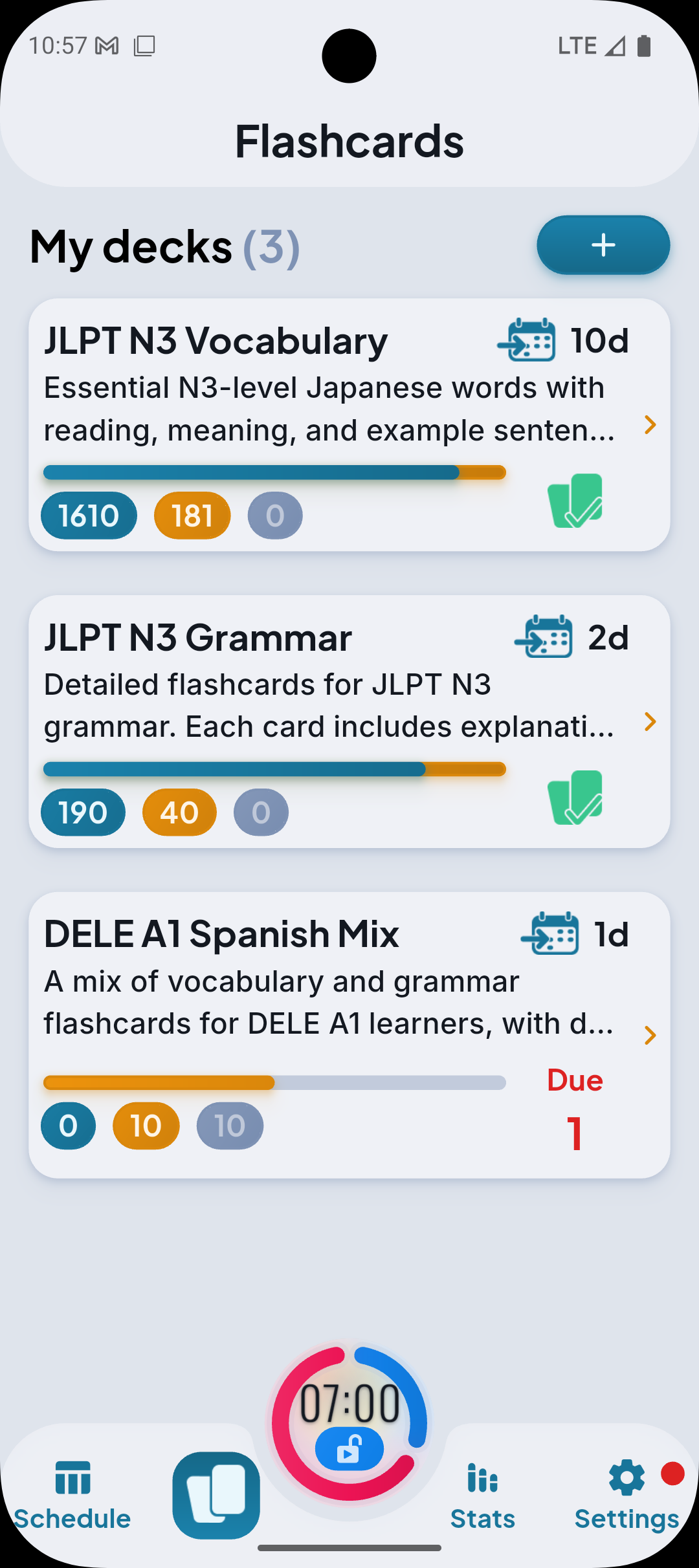
Memorizing 20 new words every day for 30 days isn't gonna help me reach 2000 words any deadlines soon.
By Day 6, I noticed that I open my phone around 25–30 times a day. If I amp up the cards-per-unlock requirement even by a little bit, my daily learning throughput would skyrocket.
So on Day 7, I made the jump: 80 new words per day, plus reviewing 100+ (cumulative) older cards on the top.
Every time the urge to scroll kicked in, it has now become a mental-trigger to learn something new, and to review some old cards. My brain is so used to this new habit loop I'd been building for mere days — not through discipline, but through the system provided by the app itself.
Why 80 words a day didn't break me
Does 80+ words per day sounds like a lot? Yeah.
But was it overwhelming? Actually, not at all. Study to Scroll allowed me to digest massive amount of knowledge within one day, and this surprised me far more than anything.
The reason I could keep up with 80 new words a day without burning out comes down to one thing: distribution.
Traditional studying asks you to sit down for a dedicated block, grind through a deck, and retain what you can. The problem is your brain gets fatigued, your attention drifts, and your review quality would start sinking after 20–30 minutes. This is also the reason why many medical students who review over hundreds of flashcards daily burn out easily, they tried to do everything together.
Study to Scroll does the opposite. Instead of one long session, your reviews are diced up and scattered across 25–30 mini-sessions throughout the day. Each one is activated everytime your screentime has exceeded, and only takes you about 60–90 seconds to complete before going back to scrolling. You might not even realize it by the time it's over.
Spaced, distributed practice produces better retention than massed practice. But knowing that and actually doing it are two different things. FocusNPlay made the distributed part automatic. I didn't have to plan it. All I have to do was simply using my phone as usual.
Building the decks: Where AI did the heavy lifting

But before all these Study to Scroll stuff fall to place, there's something more fundamental - flashcard deck content. For this experiment, I used FocusNPlay's AI deck generation feature to build both my JLPT N3 vocabulary and grammar decks, and the quality of those decks made a real difference.
A quality deck is not necessarily determined by how many cards it holds, as compared to well-designed field definitions. Think of cards like a building block of a building, and field definitions being the blueprint.
You also need good prompts when telling AI to generating a deck for you. Vague prompts give you vague cards. I spent time thinking about exactly what information I needed per card to actually understand a word — not just recognize it.
Note: The AI generation feature was still new as of the release of this article. Most of the card contents were imported externally through debug environment, which will be a live feature in the future.
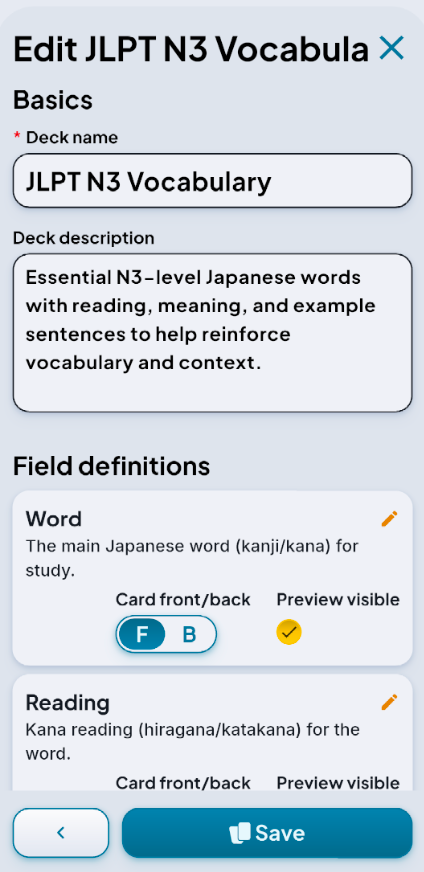
The Vocabulary Deck
For vocabulary, my prompt was roughly:
"Generate a Japanese N3 vocabulary flashcard deck. Include these field definitions separately: the original Japanese vocab; the pronounciation in full furigana; type of verb - transitive/intransitive, godan/ichidan (where applicable); translation in English; meaning in Japanese; a natural example sentence in Japanese with English translation; common synonyms (where applicable); antonyms (where applicable); and words with similar meanings that are commonly confused with this word, with clear notes on the nuance in meanings"
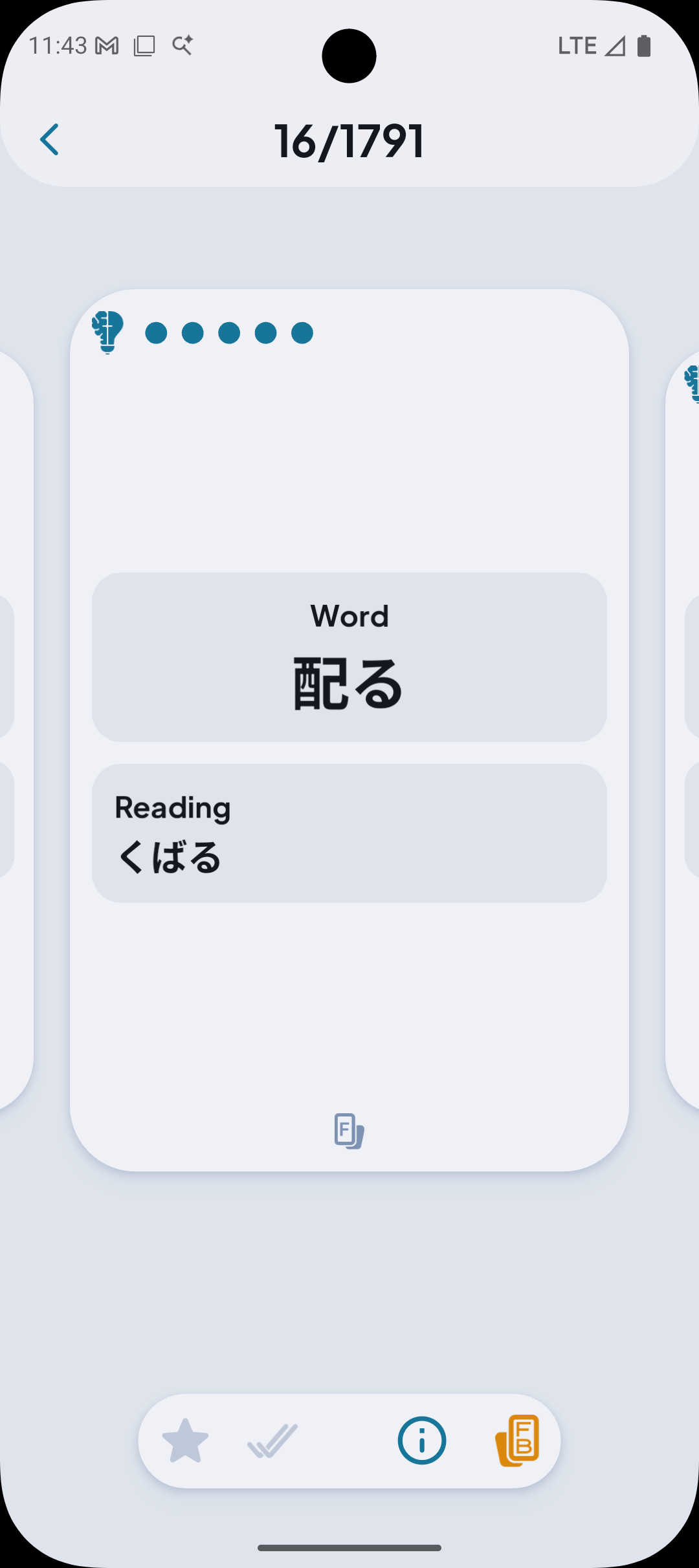
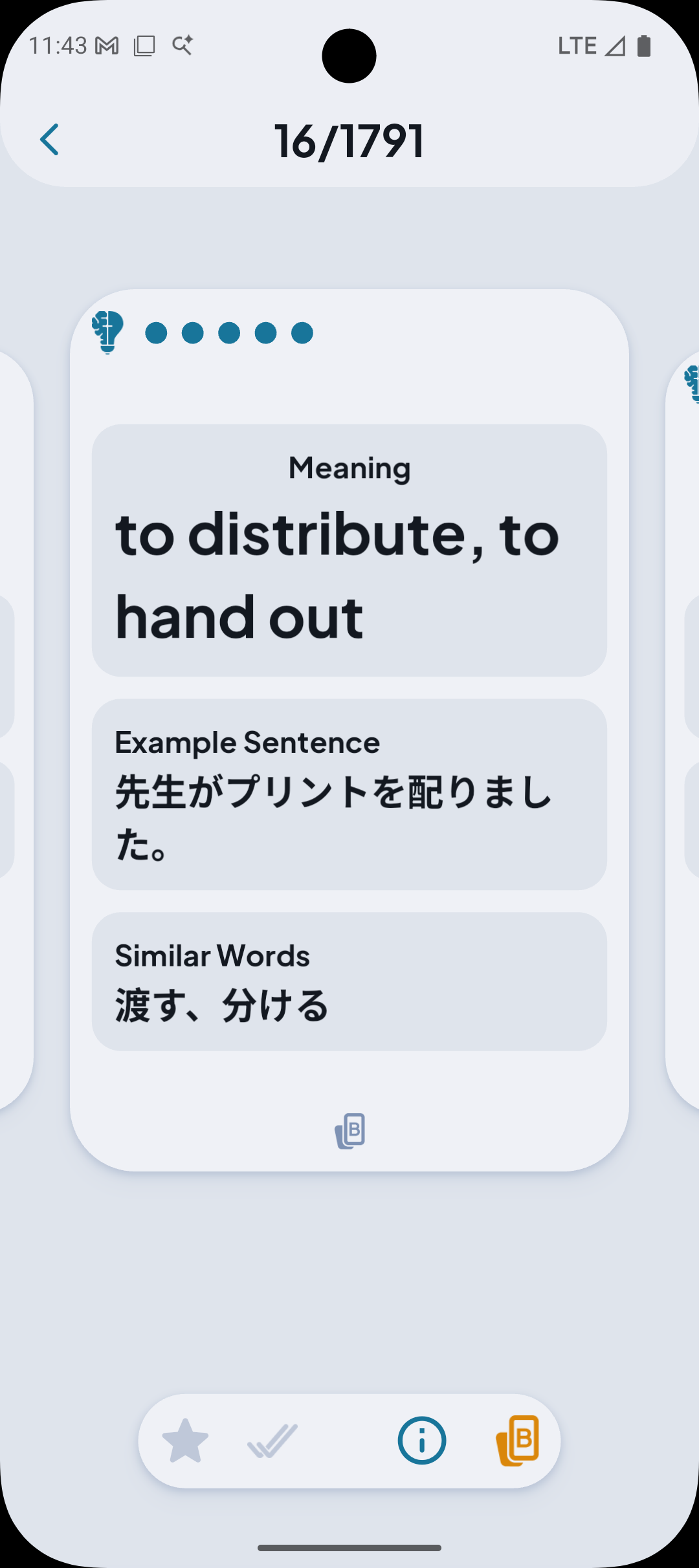
That last field — similar-but-different words — was really important. Japanese is full of near-synonyms that native speakers navigate by feel. As a learner, you need explicit guidance on the distinctions. Having that baked into every card meant I wasn't just memorizing definitions; I was building a mental map of how each word fits relative to the ones around it.
Another thing - I separated the original vocab and its pronounciation. With this I can use the vocab to recall its pronounciation, and the other way around.
A quick note on kanji: being of Chinese origin, I can read most Japanese kanji without needing furigana explanations. So for this experiment I skipped kanji breakdown fields entirely and focused the card real estate on usage, context, and nuance instead.
The Grammar Deck
Grammar needed a different approach. For that deck, my prompt was something like:
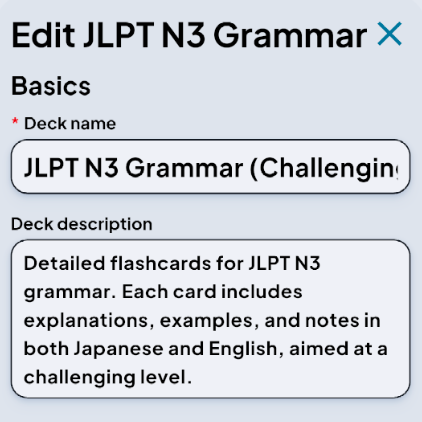
"Generate a Japanese N3 grammar point flashcard deck. For each grammar structure, include: the pattern itself; what it expresses (function/nuance); a natural example sentence with translation; grammar points that are similar or commonly confused; key differences between them; common mistakes learners make; and formality - when would this grammar be appropriate in vs. inappropriate (formal/informal/written/spoken)."
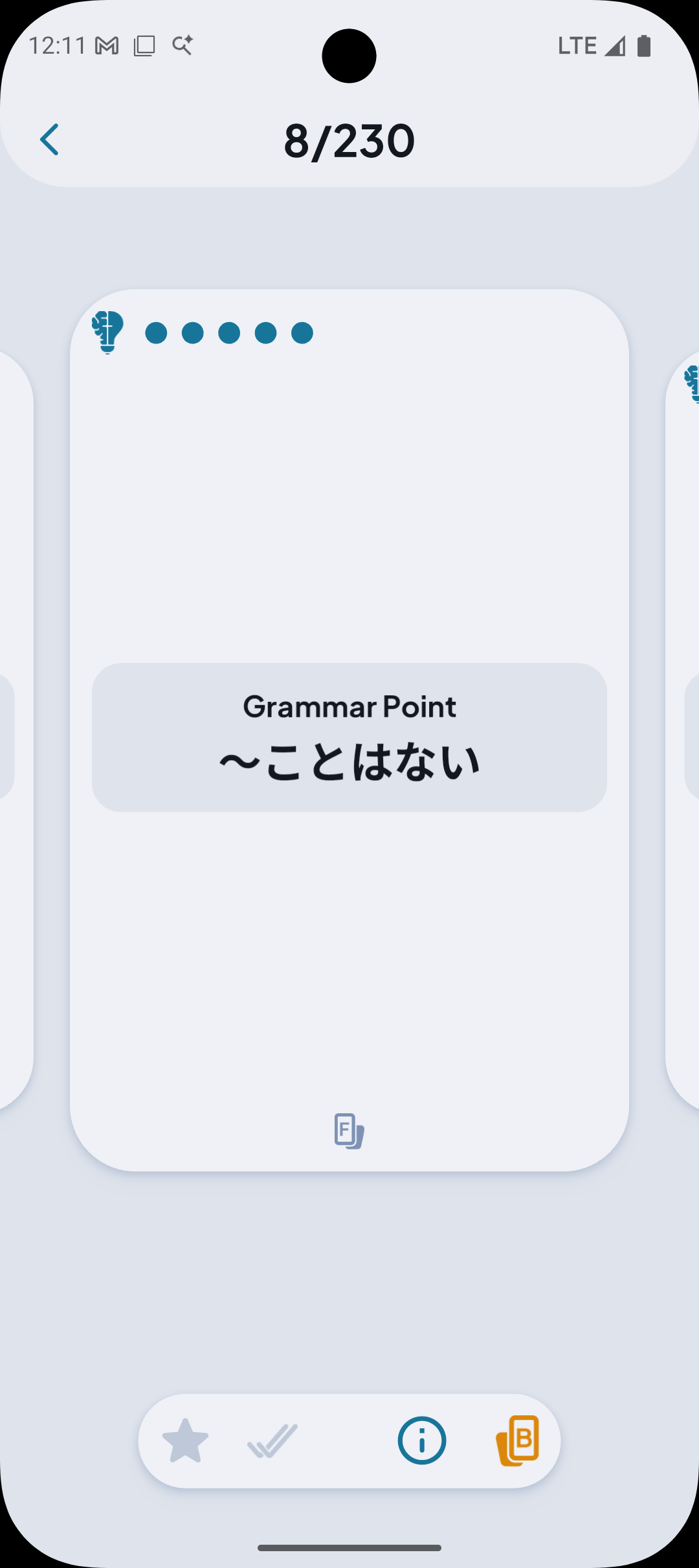
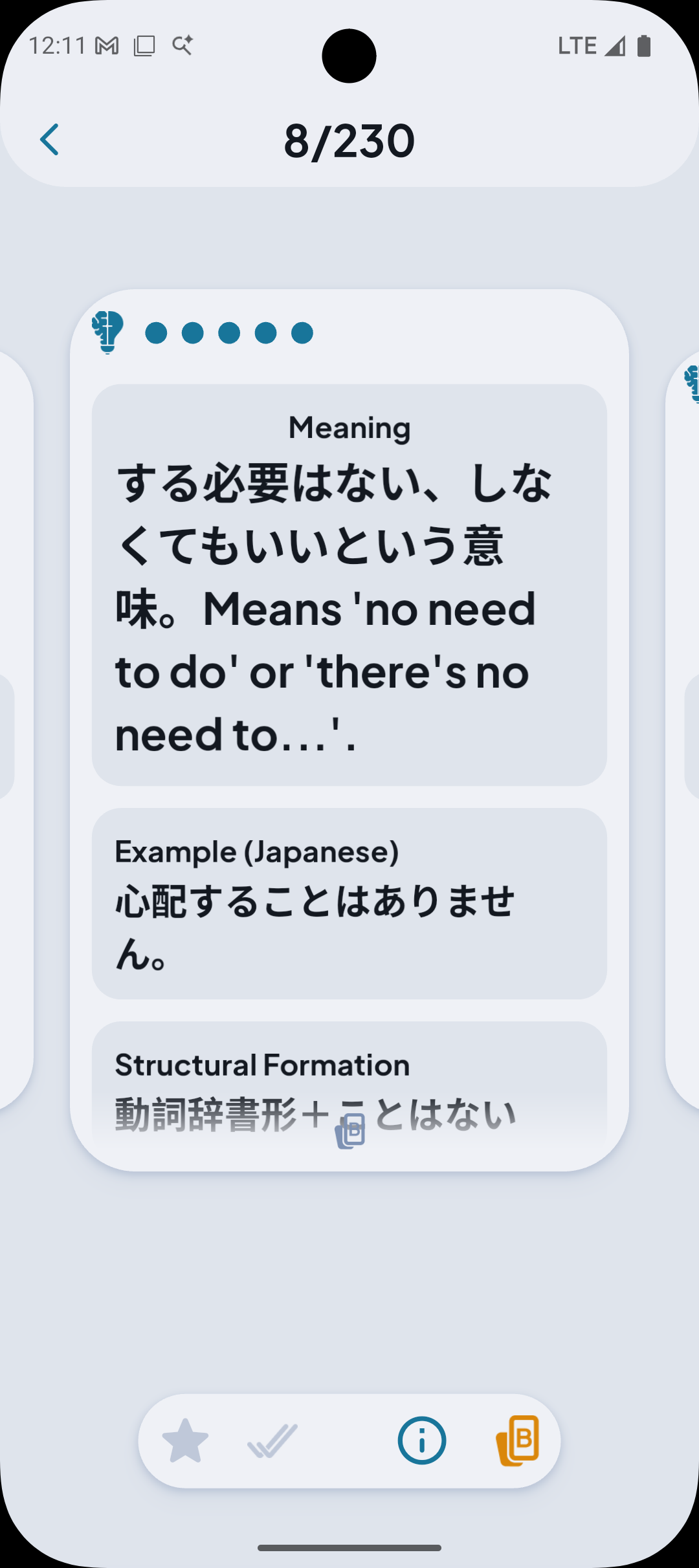
Again, the more field definitions I specified, the more I know about each concept. The AI-generated deck isn't perfect — there were a few cards I edited manually — but it got me 85–90% of the way there without hours of deck-building from scratch.
The principle applies whether you're using this for Japanese or anything else: specify as many atomic fields as possible, and describe what each field should actually convey. Don't just say "example sentence." Say "a natural, conversational example sentence showing the word in a realistic context."
Two Birds, One Phone
Here's the part I didn't fully anticipate going in: my screen time dropped significantly.
Before I started this experiment, I was averaging around 4.5 hours of screen time per day — mostly YouTube and PUBG Mobile. By the end of the 30 days, that was down to just over 1 hour.

Not because I was blocking myself out of my apps entirely. But because every unlock had a cost. When you have to earn your scroll time, you start asking whether you actually want it. More often, the answer to that would be: not really. You were just reaching for your phone out of habit, not genuine desire.
The phone addiction that had been background noise for years — those reflexive reach and mindless loop quietly disappeared. I didn't fight it. I just changed what the phone meant to me. It prioritized studying, and put entertainment second.
So yes: 1,000+ vocabulary items learned AND a phone habit broken. All thanks to this experiment.
Beyond Japanese
As I got deeper into the process, I kept thinking about how this system would adapt to other learning goals.
Other languages are the most obvious parallel. The Study to Scroll approach works particularly well for vocabulary-heavy languages like Korean, Mandarin, or Arabic — anywhere that raw word exposure and repetition is the bottleneck. The deck design principles apply directly: build in synonym/antonym comparison, usage context, and common confusions.
Medicine and law are a different beast. With medical terminology or legal concepts, the cards need to do more heavy lifting around application — not just "what does this term mean" but "when does this apply, what are the edge cases, what does it look like in practice." You'd want to engineer field definitions that push toward clinical or legal reasoning, not just recall. Think: symptom differentials on a medical card, or case examples on a legal concept card.
The underlying insight is the same across all of these: retrieval practice, distributed throughout the day, tied to something you already wanted to do. The subject matter changes. The mechanism stays the same.
The Result: N3 Passed
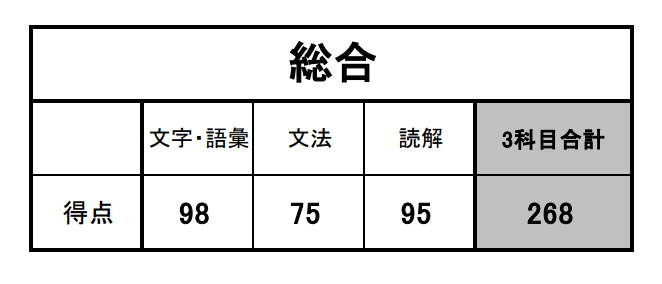
At the end of the 30 days, I sat the N3 test, and I passed.
I won't pretend I aced every section — just one mistake each in vocab and reading tests, so I'll take it. Vocabulary was a breeze, thanks to my deep understanding in conjugations. Reading comprehension was solid. Grammar was a little trickier than I expected though, mainly because some of the N4 and N5 patterns overlap just enough to doubt yourself, and seeing them in actual question context can mix a few things in my head up. Still, not so bad overall.
Honestly, the score almost felt secondary to what the experiment taught me about how I learn. Over the years of my casual learning, I always thought that I wasn't a "flashcard person." Turns out I wasn't a sit-down-and-study person.
What's still missing

I'd be doing this a disservice if I didn't talk about the gaps. Because there are real ones.
Pronunciation. The biggest one. My flashcard deck has no audio. I can read and write Japanese well enough now, but my speaking is lagging behind. FocusNPlay doesn't currently support audio generation or playback in cards — meaning I had to supplement with separate listening practice outside the app. For tonal languages like Mandarin, this would be a much bigger problem.
Open-ended and production testing. Every card in my deck was recognition-based — I see the prompt fields, I recall the answer. But real language use requires production: forming a sentence from scratch, choosing the right word under pressure, navigating ambiguity. The app might not support open-answer or written response formats yet, which would definitely push retention even further.
Conversation practice. This is the biggest ceiling. Vocabulary and grammar are infrastructure. Speaking fluently requires learning from unpredictable exchanges — which is something flashcards alone can't simulate.
These aren't complaints so much as observations. For what FocusNPlay does, it does it really well. And pretty soon, we shall see all these problem resolved by the upcoming updates.
What's coming
As someone who has benefited tremendously by this system I created for myself, and someone who first saw true potentials in it, I want to continue improving the app by closing the gaps to things like rich media support in flashcards, open-ended questions, and features that push toward more active, reality-based learning.
So I'll be the first in line when those ship. In the meantime, the Study to Scroll system — even in its current form — gave me great Japanese vocabulary boost in just 30 days than I'd managed in the previous two years of casual study.
*Stay tuned for more personalized guides + updates, and drop me a message in the FocusNPlay Discord *