Original Blog
Study to Scroll: End Doomscrolling, Unblock Apps by Studying

If you've ever picked up your phone to check a single message and found yourself still scrolling an hour later, you're not alone. Recent research shows that 53% of Gen Z adults and 46% of millennials identify as doomscrollers, with Americans spending an average of 3.5 hours doomscrolling during the workweek.
The consequences extend beyond wasted time. Studies suggest doomscrolling is linked to worse mental well-being, life satisfaction, and heightened existential anxiety. For many of us, this compulsive scrolling isn't just a bad habit — it's actively interfering with our productivity, mental health, and life goals.
Even though we understand that doomscrolling is bad for us, our brain itches for the eye candy... even for just a second more. How in the world do we finally curb the distractions once-and-for-all?
Why Traditional App Blockers Don't Work

Fact: There is no such thing as the "once-and-for-all" solution.
Speaking from my experience: As doomscrolling does more and more numbers to my mental state and productivity, I too did what millions of others have resorted to: supress screen time with app blocking tools like Forest and Opus. The concept seemed logical enough - Set a time limit, scroll, reaches the time limit, and the app locks you out for an hour or more. Problem solved, right?
Nope.
Here's what actually happened: I was on a reel-jam, stuck in mid-video when suddenly, a jarring splash screen would cut everything short, signaling a stop to my scrolling. The first few times, I felt frustrated but compliant. After a week, those interruptions became increasingly annoying. By week three, the apps sat unopened. Give it a few more weeks, and they were removed entirely.
I'm far from alone in this experience. Research examining app-based management tools found that while they have potential to reduce mobile phone use, their effectiveness varied from weak to strong, and user acceptance scores suggested significant room for improvement. Studies show it takes an average of 25 minutes to regain focus after an interruption—and traditional app blockers create interruptions without offering meaningful alternatives.
No one wants to endure sudden, forced behavioral changes, especially when the solution feels more like punishment than progress. Yes, doomscrolling is a real problem we need to overcome, but methods based solely on restriction just don't work for most people.
The Smarter Way: Study to Scroll
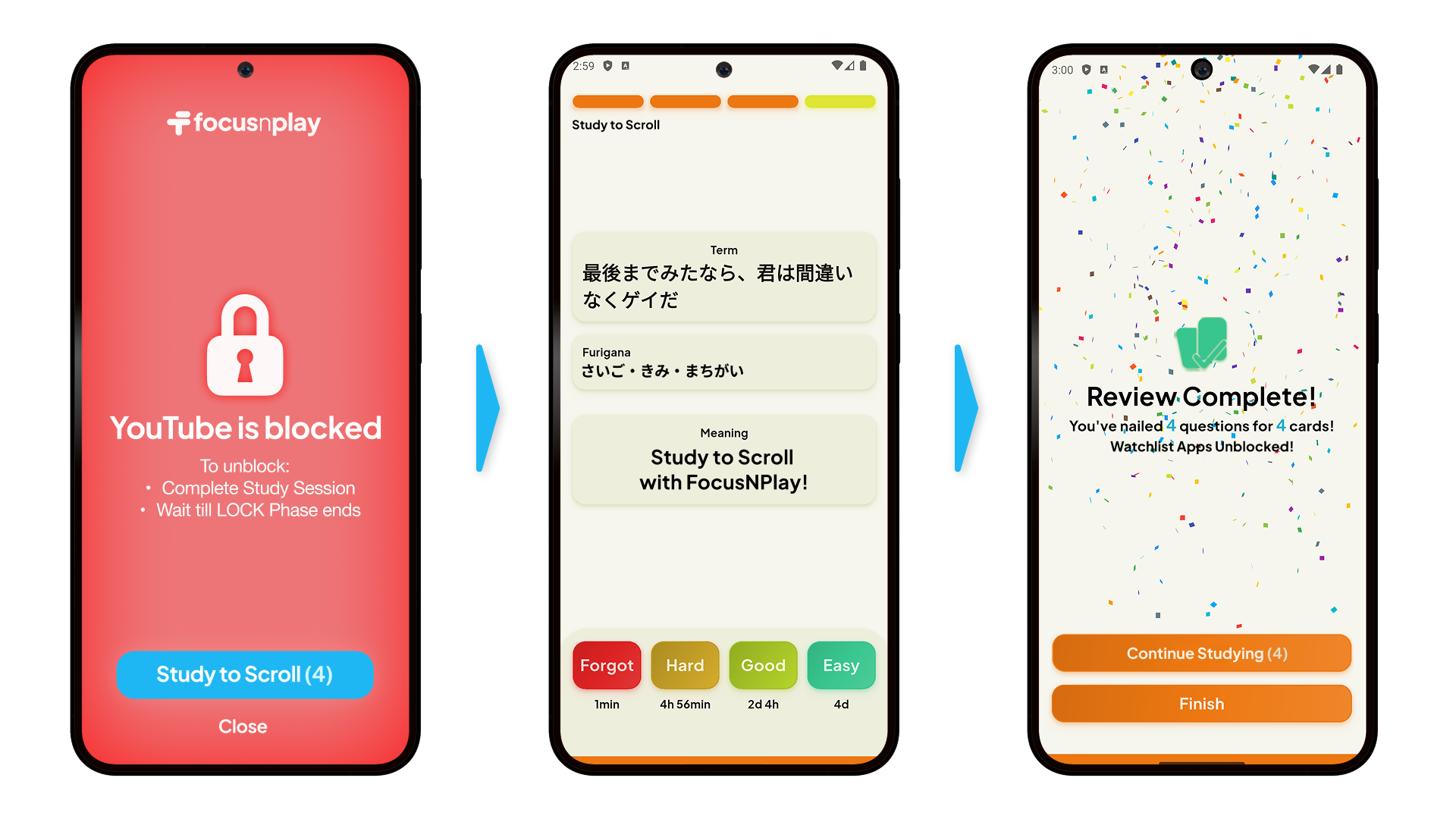
Now, picture a different approach. A tool that still sets time limits on your distracting apps. Only this time, when the apps are blocked, you have the alternative option: bypass the wait through a simple, fulfilling study session.
Here's how it works in practice:
Let's say you've set Instagram to 30 minutes per day. Once you hit that limit, the app blocks for an hour. But you don't want to wait — you were in the middle of watching an interesting reel. So rather than waiting, you choose to complete 5 quick exercises in a subject you're interested in. Each exercise takes less than 10 seconds.
The momentum feels good, so you tap on the "Continue Learning" button and knock out 10 more exercises. In total, you've spent just 2 minutes, but you've acquired 15 new pieces of knowledge. Now this is remarkable, considering most people spend those 2 minutes doing nothing!
And that's the core of Study to Scroll: transforming frictions of app blocking into rewarding micro-learning chances.
The Psychology Behind
What makes this approach different? It's built on the foundations of human motivation. Meta-analyses of gamification in education show significant positive effects on cognitive learning outcomes, with studies demonstrating that gamification can increase motivation, engagement, and interaction.
Traditional app blockers operate on deprivation — they take something away and offer nothing in return. But Study to Scroll operates on exchange — here you earn screen time through constructive, meaningful activity. This subtle shift changes everything about how you perceive the limitation:
- Traditional blockers: "My apps are being taken away from me" (utter resentment)
- Study to Scroll: "I can earn my entertainment by learning something" (motivation)
By treating screen time as a reward you have to earn, you no longer view app blocking as a nuisance. Instead, you see it as a challenge that benefits your growth.
No more frustrations, embrace motivations.
Hitting Two Birds with One Stone
I've always been eager to maximize productivity by doing two valuable things simultaneously — not multitasking (which rarely works well for me), but finding the right moments to do more without pushing yourself too hard.
A perfect example: pedaling hard on a bike machine while watching educational documentaries. By the end of your training session, your quads are stronger and you've learned something interesting. Over weeks and months, these mixed workflows become so natural that your achievements arrive earlier than expected. This approach significantly improved my learning and reading capabilities during university without sacrificing entertainment.
Study to Scroll follows the same principle. By completing small exercises that contribute to your learning goals, you:
- Reduce screentime through meaningful friction
- Make progress on your studies through consistent micro-learning sessions
- Build positive associations between productivity and rewards
Research shows reward feedback has a moderately positive effect on student academic performance, with studies revealing enhanced engagement and learning outcomes across various educational contexts.
Making Daily Goals Achievable
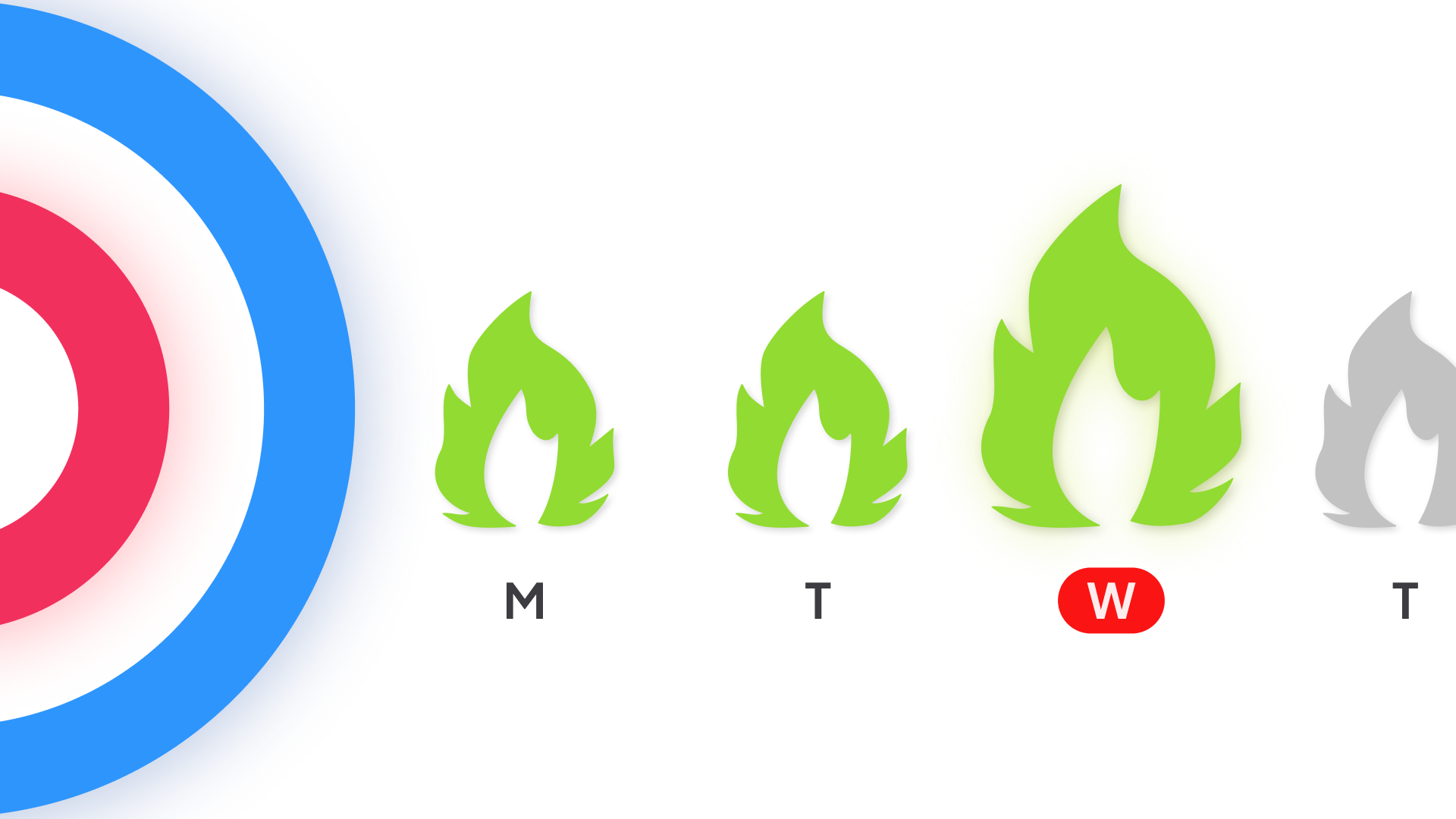
Our built-in goals and streak system keeps your screentime in check while ensuring you hit study goals every day, gradually reducing your reliance on mindless scrolling.
But how do you actually maintain this? Most people find their screentime bounces back to normal after a few days, even with the best of intentions. Study goals get forgotten too. There's nothing wrong with you if this happens — as productivity expert James Clear writes in Atomic Habits: "You do not rise to the level of your goals. You fall to the level of your systems."
Study to Scroll designs that system. Each time app's blocked, you can: stop scrolling, or spend a few minutes learning something new first. This gives you exactly the right amount of motivation to "buy" your entertainment by completing the study session.
And if this is repeated throughout your day, you can easily digest 50+ exercises per day, consistently and effortlessly. At this rate, what used to take years of practice can now be mastered in mere months without the friction and failure of traditional approaches.
Build the System, Avoid the Struggle

No achievements are done with willpower alone. It's through a change in the system itself.
With approximately 31% of American adults doomscrolling regularly (rising to 46% for millennials and 51% for Gen Z), and research linking this behavior to increased stress, anxiety, and poorer overall health, we need solutions that work with human psychology, not against it.
Meta-analyses show rewarding mechanism produces small-to-medium effects on cognitive, motivational, and behavioral learning outcomes, making it a scientifically validated approach to improving both learning and behavior change.
To conclude, Study to Scroll doesn't demand that you develop superhuman self-control overnight. Instead, it gently nudges you toward better habits by making the productive choice also the path of least resistance. Each micro-learning session is that 1% investment in your future self, and each one makes the next a little bit easier.
Ready to Transform Your Screen Time?
If you're tired of feeling guilty about doomscrolling, frustrated by app blockers that don't stick, or simply ready to turn your scrolling habit into a learning opportunity, Study to Scroll offers a different path forward.
The question isn't whether you can stop doomscrolling through pure willpower — it's whether you're ready to build a system that makes productivity the easier choice.
Your future self will thank you for all those 2-minute study sessions that seemed so small in the moment but added up to something remarkable over time.
Read more on effective productivity techniques and digital wellbeing: